The Hidden Superpower Behind Every Great Reader
Why Theory of Mind is the literacy skill you've probably never heard of - and how you're already building it.


I’m a pediatric speech-language pathologist, and I’ve spent years working with young children on language and literacy. If there’s one thing I wish every parent knew, it’s this: learning to read is not just about letters and sounds. It’s about understanding minds.
In my previous issue, I discussed literacy and social language. Connected to this I want to introduce to you a concept called Theory of Mind (ToM). This is a cognitive skill that research shows is deeply connected to how well children comprehend what they read, how richly they understand stories, and how powerfully they develop language overall.
The good news? You are probably already nurturing this skill. After reading this, you’ll know exactly how to do even more.
Here is the link to my previous issue on the topic of literacy and social communication
What is Theory of Mind?
The Skill That Lets Us Step Into Someone Else’s World
Theory of Mind (ToM) is the ability to understand that other people have their own thoughts, feelings, beliefs, and perspectives — and that those mental states can be different from our own.
“She doesn’t know what I know.” “He feels scared, even though I think it’s fine.” “I can pretend to be surprised even though I already know.”
These are all examples of Theory of Mind at work. It is sometimes called “mind-reading” — not in a magical sense, but in the deeply human sense of imagining what is happening inside another person’s head.
ToM is not something children are born with fully formed. It develops gradually throughout childhood:
Around age 2–3: Children begin to recognize that others have feelings and desires different from their own.
Around age 3–4: Children start to understand that someone can have a false belief — that a person can think something is true when it isn’t.
Ages 5–8+: Children develop increasingly nuanced ToM — understanding deception, sarcasm, white lies, mixed emotions, and complex social motives.
SLP INSIGHT
The classic test of false-belief understanding — often called the Sally-Anne task — is a reliable milestone marker for Theory of Mind. By around age 4–5, most children can correctly predict that Sally will look for her marble where she left it, not where it was moved while she was away. This shift signals a major leap in social cognition.
👇🏽Here is a video that further explains the task:
What is Theory of Mind?
Great Readers Don’t Just Decode — They Infer
Reading comprehension goes far beyond recognizing words on a page. To truly understand a story, a child must:
Understand why characters make the choices they do
Predict what a character will do based on what they know — or don’t know
Recognize when a character is hiding feelings, being dishonest, or feeling conflicted
Understand how two characters might experience the same event differently
Make inferences that aren’t directly stated in the text
All of these require Theory of Mind. A child who understands that characters have inner lives that drive their actions will comprehend stories with far greater depth than a child who processes narrative purely at the surface level.
“A child who can only decode words is reading the text. A child with strong Theory of Mind is reading the story.”
Research consistently shows that children with stronger ToM perform significantly better on measures of reading comprehension, narrative retelling, and inferencing — even when controlling for general cognitive ability and vocabulary.
In my own clinical experience, some of the most telling moments come when I ask a child, “Why do you think the character did that?” Children with well-developed ToM answer with nuance. Children still developing it will often answer with what happened, not why.
Cognitive and Linguistic Development
Theory of Mind Builds the Whole Brain for Language
ToM doesn’t develop in isolation. It is interwoven with several other critical areas of cognitive and linguistic growth:
Mental-State Vocabulary
Language and ToM develop in a beautifully reciprocal loop. As children develop ToM, they begin using mental-state words more frequently and accurately: think, believe, know, wish, wonder, pretend, imagine, feel. These words are not just vocabulary — they are the building blocks of internal narrative. A child who says “I wonder what she’s thinking” is demonstrating sophisticated linguistic and cognitive integration.
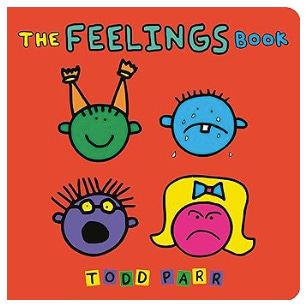
This is a fun book for 2-4 year olds to support mental-state vocabulary:
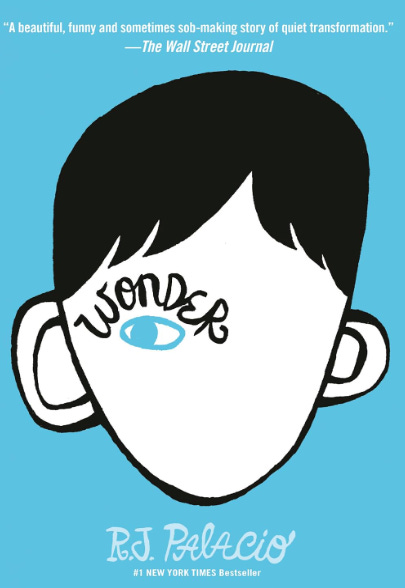
This is one of my favorite books for 8-12-year-olds to support teaching empathy and kindness. We warned you that you may get a little teary-eyed. If your family enjoys audiobooks, the Audible version does a fantastic job with narration, featuring different kid voices for each character.
Executive Function
Understanding that someone else holds a different belief requires holding two competing representations in mind simultaneously — your own knowledge and their incorrect belief. This directly exercises working memory and cognitive flexibility, two pillars of executive function that broadly support academic learning.
Oral Language & Storytelling
Children who understand character motivation tell richer, more organized stories. Oral storytelling ability is one of the strongest early predictors of later reading comprehension. When a child retells a book and explains why the character cried, not just that they cried, that causal understanding is ToM at work.
Pragmatic Language
Pragmatics — the social use of language — depends deeply on ToM. Understanding when to say what, how to interpret sarcasm, how to adjust your words for a different listener, and how to repair misunderstandings all require inferring what another person knows, feels, and expects. These skills transfer directly to written language and comprehension.
SLP RESEARCH NOTE
Studies in developmental psychology and educational linguistics have consistently found that ToM in preschool and early elementary years predicts reading comprehension outcomes in later grades, often more reliably than phonological awareness alone. ToM and decoding skills work together — not in competition.
ToM In Action
What Theory of Mind Looks Like During Reading
Here are some real moments of ToM during shared reading with young children:
“Why is the bunny hiding?” — “Does he think the fox can’t see him?” This child is reasoning about a character’s false belief.
Before the page turn: “She’s going to be so surprised — she doesn’t know what we know!” This is classic false-belief understanding applied to narrative.
After a character lies: “He said he didn’t eat the cookies, but I know he did.” The child distinguishes between what the character says and what is true.
During conflict: “She’s mad, but I think he didn’t mean to be mean.” The child holds two emotional perspectives simultaneously.
Ambiguous situations: “I think the wolf is scary, but maybe the pigs just don’t understand him.” The child considers an alternate character perspective.
Notice that none of these comments are about decoding or word recognition. They are about understanding minds — and they are rich signs of healthy literacy development.
Practical Tips for Parents
5 Ways to Nurture Theory of Mind Every Day
The most powerful thing about ToM is that you don’t need special materials or structured lessons to develop it. Everyday conversation and shared reading are your most effective tools. Here’s how to use them intentionally:
1. Ask “feelings” questions during storytime. Rather than asking “What happened?”, try “How do you think she felt when that happened?” or “Why do you think he made that choice?” These questions shift the focus from plot to inner life — which is where comprehension truly lives.
2. Use mental-state language naturally. Narrate your own thinking and feeling: “I wonder what he’s thinking.” “She doesn’t know yet, but we do!” “I’m surprised — I didn’t expect that!” This kind of language models perspective-taking and builds your child’s mental vocabulary.
3. Encourage pretend play. Dramatic and imaginative play is one of the richest natural training grounds for ToM. When children play characters, they practice inhabiting other perspectives. Don’t underestimate the developmental power of playing house, superheroes, or stuffed animal adventures.
4. Pause and predict before turning the page. “What do you think will happen next?” and “Why do you think that?” are deceptively powerful questions. They require your child to reason about character knowledge, goals, and beliefs — the heart of ToM.
5. Connect books to real life. After reading, invite your child to connect a character’s feelings to their own experience: “Have you ever felt that way?” or “How do you think your friend felt when that happened at school?” This bridges fictional perspective-taking into real social understanding.
Here are a few book recommendations organized by age that support ToM growth:

Closing Thoughts
Reading Together is the Most Powerful ToM Practice of All
There is no app, worksheet, or curriculum that rivals the richness of a parent reading alongside their child and talking about what the characters think, feel, want, and believe. It is simple. It is free. And the research says it works.
Every time you pause over a picture book and ask, “I wonder how she feels right now,” you are doing more than building a reader. You are building a child who understands people — in books, in life, and in themselves.
If you ever have concerns about your child’s language or literacy development, a pediatric speech-language pathologist can be a wonderful partner. We specialize in this intersection of language, cognition, and literacy — and we love working with curious, engaged parents like you.
Thank you for reading. Until next time — keep reading, keep talking, and keep wondering together.